

Why Timber Frame Is an Environmentally Smart Choice
Timber is a natural, renewable building material. When sourced responsibly, it has the lowest embodied carbon of any mainstream construction system. As trees grow, they absorb carbon dioxide from the atmosphere. When harvested and used in construction, that carbon remains locked away in the timber for the life of the building.
FrameCo uses FSC® or PEFC-certified timber in all our frames, supporting responsible forest management and supply chain transparency. Compared to concrete or steel structures, timber frame systems deliver significant reductions in embodied carbon, helping projects meet sustainability targets with ease.
Additional environmental advantages include:
- Low embodied energy compared to masonry and steel systems
- Carbon sequestration through the use of solid timber components
- Reduced waste through precision off-site manufacturing
- Minimal site impact thanks to shorter build times and less material movement
- Compatibility with natural insulation products and breathable wall systems
These features make timber frame an ideal choice for clients pursuing BREEAM, Passivhaus, AECB, LETI or RIBA 2030 Climate Challenge targets.
Supporting Circular and Low-Waste Construction
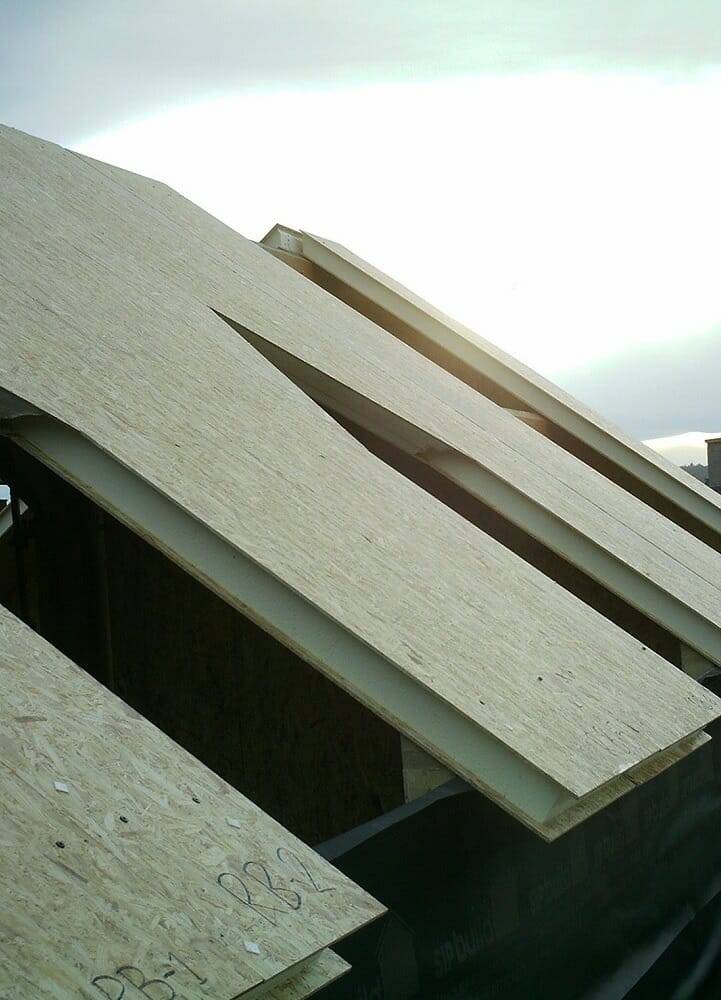
Off-site manufacturing allows us to produce timber frames with millimetre accuracy, significantly reducing cutting waste, packaging and transport volume. Any off-cuts are repurposed, recycled, or used for biomass energy wherever possible. Timber frame also supports deconstructable design, with fixings and frame components that can be dismantled at end-of-life instead of being demolished. FrameCo can help specifiers design for longevity, adaptability and low-impact refurbishment, reducing whole-life carbon and future resource consumption.
FrameCo timber frame systems are designed to meet or support a wide range of sustainability and carbon-reduction frameworks:
- FSC® and PEFC timber certification for responsibly sourced materials
- Part L compliance with enhanced fabric-first performance
- Alignment with PAS 2050 and EN 15804 principles for embodied carbon accounting
- Support for achieving credits under BREEAM, Code for Sustainable Homes, and RIBA 2030 targets
Future-Proofing for Net Zero and the Future Homes Standard
As the UK construction sector takes steps to reduce its environmental impact, timber frame is proving to be a forward-thinking and practical solution. The built environment currently accounts for around 40% of the UK’s total carbon emissions, underscoring the need for new approaches to meet national climate goals.
From 2025, the Future Homes Standard will require new homes to produce at least 75% fewer carbon emissions compared to the 2013 regulations. This will raise expectations for energy efficiency and low-carbon design across all types of residential development. Timber frame construction offers a strong foundation for these changes. It combines low embodied carbon with high-performance fabric design, making it easier to meet future compliance targets without relying on costly upgrades or retrofits.
Key advantages include:
- Natural compatibility with heat pumps, solar PV and other renewable systems
- Excellent thermal insulation, supporting low operational energy use
- Significantly lower embodied carbon than masonry or steel frame alternatives
- Off-site precision that supports airtight, energy-efficient detailing
- Full support for regulatory compliance, including Approved Document L and SAP assessments
FrameCo timber frame systems are designed to help developers, architects and self-builders meet today’s standards while preparing for tomorrow’s. We work closely with clients to optimise fabric build-ups, reduce thermal bridging, and incorporate ventilation strategies that support comfort and compliance.
Timber frame also supports wider policy goals for housing delivery. It enables quick, cost-effective construction of sustainable homes that are comfortable to live in and affordable to run. Whether you are delivering private housing, social schemes or high-performance homes, timber frame is a scalable, future-proof choice that aligns with national and local sustainability ambitions.
QUICK LINKS:

STRUCTURAL
PERFORMANCE

ACOUSTIC
PERFORMANCE

FIRE
PERFORMANCE

THERMAL
PERFORMANCE

VENTILATION
PERFORMANCE

DURABILITY
PERFORMANCE